Who was King Ahaz and why is he significant in the Bible?
One of the most significant contributions to King Ahaz's legacy is his departure from the worship of Yahweh and the introduction of pagan practices. Influenced by the Assyrians, Ahaz adopted their customs, which included idol worship and child sacrifice—a grave offense according to Jewish law.
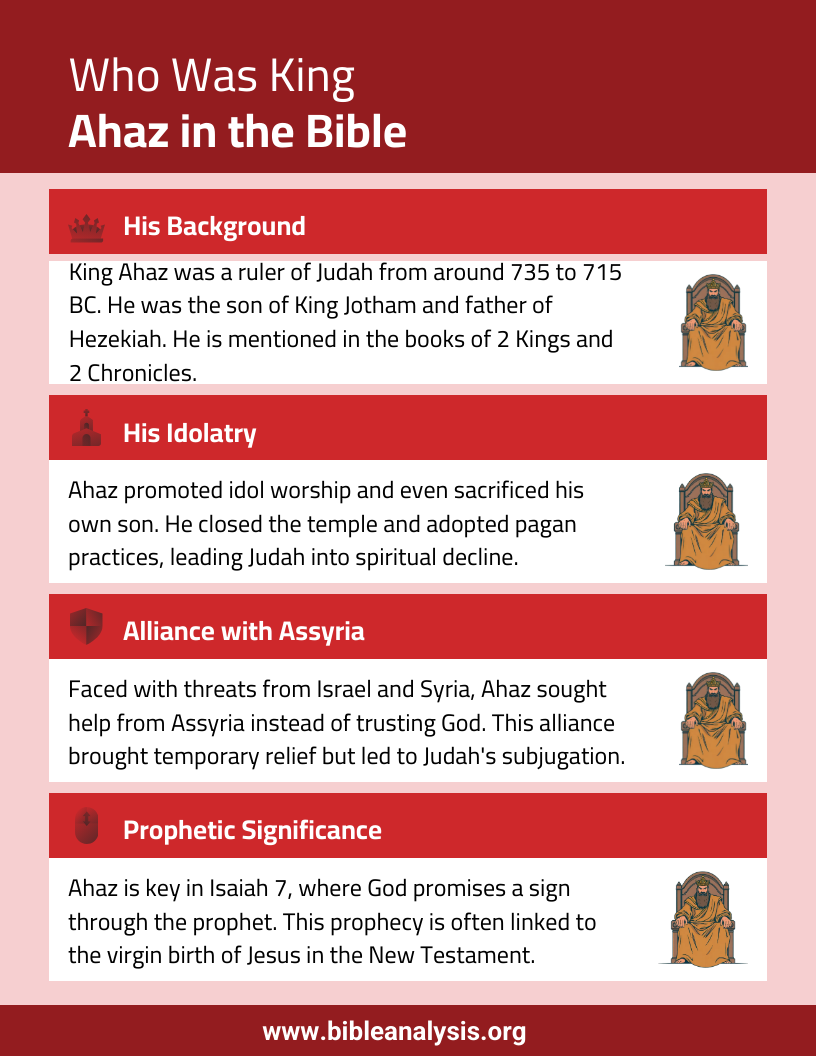
King Ahaz, the 12th king of Judah, reigned during a tumultuous period in the history of Israel and Judah, specifically from 735 to 720 BCE. He was the son of King Jotham and the grandson of King Uzziah. Ahaz's reign is marked by a series of political and religious challenges that deeply influenced the trajectory of Judah. His significance in the Bible lies in his decisions, alliances, and the impact they had on the faith of his kingdom and the broader narrative of Israel's history.
Political Context and Reign
Ahaz ascended to the throne during a time of crisis for the divided kingdoms of Israel and Judah. The northern kingdom of Israel had formed an alliance with Aram (Syria) against Assyria, threatening Judah. King Ahaz faced immense pressure as these two powers invaded Judah, leading him to make a pivotal choice: rather than trusting in God for deliverance, he sought help from Tiglath-Pileser III, the king of Assyria. This decision to rely on a foreign power rather than divine intervention was one of the defining aspects of his reign and marked a shift in Judah's political and religious landscape.
Religious Practices and Idolatry
One of the most significant contributions to King Ahaz's legacy is his departure from the worship of Yahweh and the introduction of pagan practices. Influenced by the Assyrians, Ahaz adopted their customs, which included idol worship and child sacrifice—a grave offense according to Jewish law. He even reinstated the worship practices of the high places, which were condemned by previous kings. This shift led to increased moral and spiritual decay within Judah and alienated the nation from the true worship of God, causing a rift that would have consequences for generations to come.
The Prophet Isaiah and King Ahaz
The biblical narrative in the book of Isaiah highlights the interaction between Ahaz and the prophet Isaiah. Faced with the threat from Israel and Aram, Ahaz was reassured by Isaiah that God would protect Judah. Isaiah encouraged Ahaz to ask for a sign to confirm God's promise, but the king refused, claiming he did not want to test the Lord. This refusal was viewed as an act of disbelief, and Isaiah delivered a prophetic message declaring that a sign would be given nonetheless: “The virgin will conceive and give birth to a son, and will call him Immanuel” (Isaiah 7:14). This prophecy not only offered hope to Judah but also held significant messianic implications in Christian theology.
Legacy and Theological Significance
Ahaz’s reign is often viewed negatively in biblical narratives, primarily due to his failure to uphold the covenantal relationship with God. His alliance with Assyria, reliance on foreign gods, and embrace of idolatry led to dire repercussions for Judah, ultimately contributing to its downfall. Theologically, Ahaz’s actions serve as a cautionary tale about the dangers of compromising faith for political expediency. His story is a reminder of the importance of steadfastness in one’s convictions and trust in divine guidance during turbulent times.
Conclusion
King Ahaz stands as a controversial figure in the history of Judah, representing the complexities of faith, leadership, and the consequences of turning away from God. His decisions not only impacted his own reign but also set the stage for the future struggles of his kingdom.
Understanding Ahaz's legacy helps readers grasp the historical and spiritual challenges faced by Judah and the overarching theme of faithfulness to God that resonates throughout the biblical narrative. Thus, while King Ahaz may not be viewed as a righteous leader, his significance in the Bible remains, echoing the lessons of faith, trust, and divine providence that are relevant to believers today.
FAQ: King Ahaz of Judah
Q1. Who was King Ahaz?
King Ahaz was the 12th king of Judah, reigning from 735 to 720 BCE. He was the son of King Jotham and the grandson of King Uzziah.
Q2. What was the political situation during Ahaz's reign?
Ahaz ruled during a time of crisis for both Israel and Judah. The northern kingdom of Israel allied with Aram (Syria) against the powerful Assyrian empire. When Israel and Aram threatened Judah, Ahaz sought help from Assyria rather than relying on God, fundamentally changing Judah's political and religious direction.
Q3. How did Ahaz impact religious practices in Judah?
Ahaz is remembered for introducing pagan practices to Judah. Influenced by Assyrian customs, he engaged in idol worship and child sacrifice, actions considered severe violations of Jewish law. He also reinstated worship at high places, which had previously been condemned.
Q4. What was the significance of the prophet Isaiah's interaction with Ahaz?
When Judah faced invasion, the prophet Isaiah assured Ahaz that God would protect the kingdom. Isaiah encouraged Ahaz to ask for a sign from God, but Ahaz refused. Isaiah then delivered a prophecy about a virgin bearing a son called Immanuel, a message with both immediate and messianic implications.
Q5. Why is Ahaz's reign viewed negatively in the Bible?
Ahaz's failure to uphold Judah's covenant with God, his alliance with Assyria, and his embrace of foreign gods led to moral and spiritual decline in Judah. His reign is often cited as a cautionary tale about the consequences of compromising faith for political gain.
Q6. What is the theological significance of King Ahaz?
The story of Ahaz serves as a warning about the dangers of forsaking faith and the importance of trusting in divine guidance, especially in difficult times. His actions contributed to Judah's eventual downfall and are a reminder of the value of steadfastness in one's convictions.
Q7. How does King Ahaz's story fit into the broader biblical narrative?
Ahaz's reign set the stage for future struggles in Judah and underscored the recurring biblical theme of faithfulness to God. His legacy, though controversial, highlights lessons about leadership, faith, and the repercussions of turning away from divine guidance.