What country is Tarshish today?
The most widely accepted identification of Tarshish points to southeastern Spain. Historically, this region, especially around the city of Cádiz, was known as a center for trade and maritime activities.
Known primarily from the Hebrew Bible, Tarshish was mentioned in relation to trade, seafaring, and distance. As with many ancient locations, pinpointing its exact location has been a subject of much debate. In this blog post, we will explore where Tarshish may be situated today.
Tarshish in Historical Context
Tarshish is mentioned multiple times in the Hebrew Bible, often associated with wealth and maritime trade. The most famous references come from the Book of Jonah, where the prophet attempts to flee to Tarshish, indicating its status as a distant and likely prosperous location.
Another significant reference is found in the Book of Kings, where it is described as a place from which ships would arrive with cargoes of gold, silver, ivory, and apes, highlighting its economic importance during the times of King Solomon (1 Kings 10:22).
The exact identification of Tarshish has sparked numerous theories. While many scholars believe it was a distant western city known for trade, the specific geographic location remains uncertain.
Various ancient sources suggest that Tarshish might have been located in regions around the Mediterranean Sea, particularly in the southern part of Spain, including the area around modern-day Cádiz.
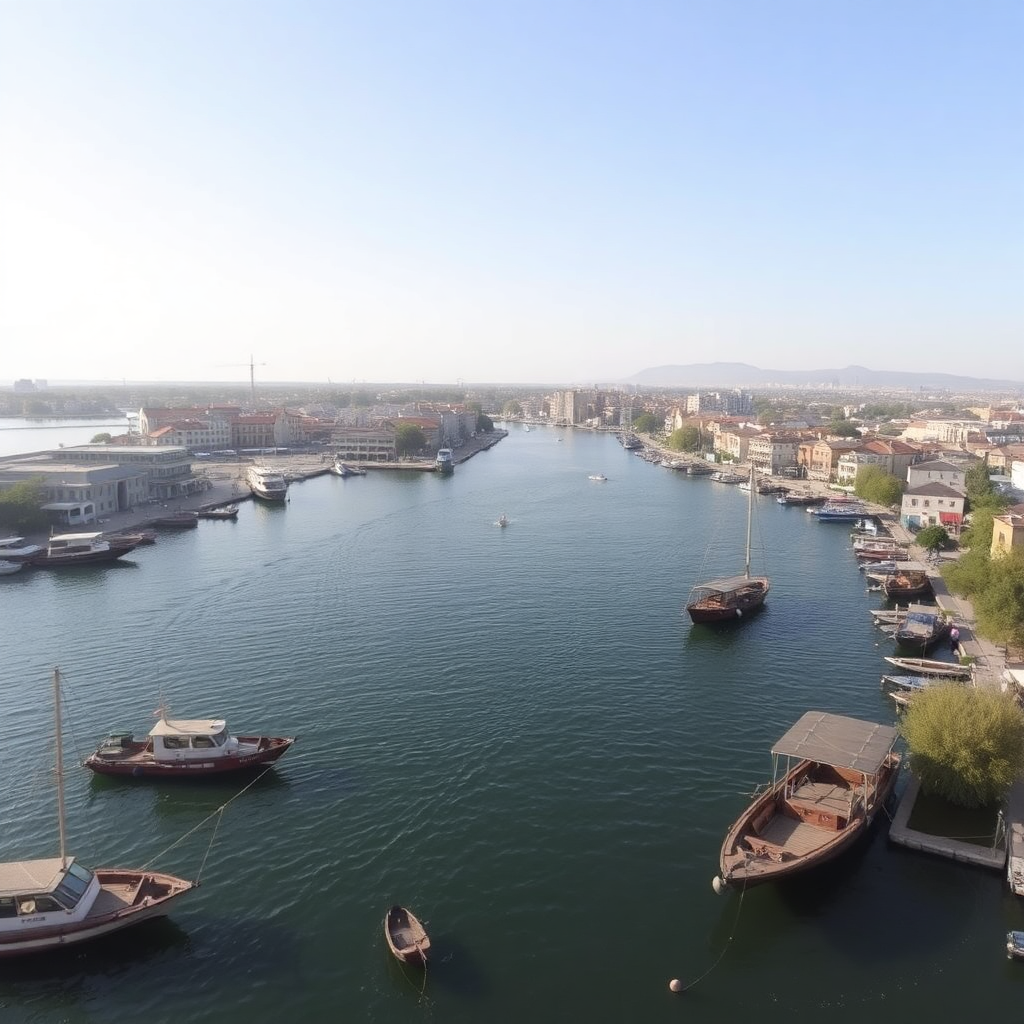
Potential Locations of Tarshish
The most widely accepted identification of Tarshish points to southeastern Spain. Historically, this region, especially around the city of Cádiz, was known as a center for trade and maritime activities. The Romans and Phoenicians heavily populated this area, leading many to view it as a plausible location for Tarshish due to its active ports and commercial significance.
Another potential candidate for the location of Tarshish is the coastal area of Tarsus in modern-day Turkey. While Tarsus does not fit all the characteristics attributed to Tarshish in the biblical text, its geopolitical importance during ancient times makes it a contender in the ongoing discussion. Tarsus was a bustling trade city, serving as a vital point of connection between different cultures and economies.
Some scholars even propose that Tarshish could refer to locations beyond the Mediterranean, extending to the coasts of North Africa or beyond, particularly in areas known for their mineral wealth. This possibility broadens the horizons of inquiry into the historical connections between the ancient Near East and the broader Mediterranean world.
Tarshish’s Significance in Trade and Culture
Historical documents suggest that Tarshish was involved in extensive trade networks that linked various regions, facilitating the exchange of goods, culture, and ideas. The products that arrived from Tarshish were not only commodities but also representations of cultural influence, impacting the societies that engaged with them.
The wealth of Tarshish, especially in the context of the biblical narrative, also paints a picture of prosperity and the pursuit of resources. The mention of luxuries such as gold and exotic animals reflects both the natural riches of the region and the extensive maritime capabilities of its people. By exploring Tarshish, we can glean insights into the economic motivations that drove ancient civilizations and how trade influenced their development.
The Modern Legacy of Tarshish
Today, the legacy of Tarshish continues to resonate in various fields of study. In biblical scholarship, it serves as a point of discussion regarding ancient trade routes, maritime history, and the geographical understanding of the ancient world.
Moreover, the trade connections attributed to Tarshish offer a glimpse into the early interactions between different cultures, which laid the groundwork for future developments.
In popular culture, Tarshish is sometimes seen as a metaphor for far-off places or unreachable goals. Its symbolic use reflects humanity's ongoing fascination with exploration, adventure, and the quest for knowledge about the world beyond our immediate surroundings.
The narrative of Jonah and his journey to Tarshish further emphasizes the themes of defiance, redemption, and the unpredictability of life’s journey. This tale resonates across cultures and reminds us that the search for meaning can lead us on unexpected paths, much like the seafaring merchants of the ancient world.
Tarshish in Biblical Prophecy and Poetry
Beyond its role in trade, Tarshish holds symbolic significance in biblical prophecy and poetry. In books such as Isaiah and Ezekiel, Tarshish is portrayed as a distant land whose ships will one day bring offerings or pay homage, contributing to the restoration and glory of Israel (Isaiah 60:9; Ezekiel 27:12).
These references use Tarshish both as a literal trading partner and as a symbol of the far reaches of the known world, emphasizing the breadth of Israel’s envisioned influence and God’s sovereignty over all nations. The poetic depiction of “ships of Tarshish” often evokes images of adventure, prosperity, and the mysterious unknown.
Archaeological Perspectives and Ongoing Debates
Archaeological evidence related to Tarshish remains inconclusive, adding to the mystery and allure of its identity. Finds in the region of Cádiz, such as Phoenician and Roman artifacts, support the idea of a bustling ancient port city. However, definitive proof linking these remains specifically to biblical Tarshish is lacking.
Similarly, evidence from Tarsus and other Mediterranean sites reveals rich histories of trade, but their connection to the Tarshish of the Hebrew Bible is still debated. As technology and methods advance, archaeologists continue to search for clues—inscriptions, shipwrecks, and trade goods—that might one day clarify the real location of this enigmatic place.
Personal Reflection
Reading about Tarshish, I am struck by how mystery and possibility often go hand in hand. In the biblical imagination, Tarshish was more than just a place—it was the edge of the known world, a symbol of wealth, adventure, and the dream of what lay beyond the horizon. Whether its true location was Spain, Turkey, North Africa, or somewhere entirely different almost seems beside the point. What matters is what Tarshish represented: a world of connections, risk, and the lure of the unknown.
The story of Jonah fleeing to Tarshish has always resonated with me. I see in his journey a very human impulse—to escape, to seek out some distant refuge when life’s demands seem overwhelming. Tarshish, for Jonah, becomes a place of avoidance, but also a place of possibility. It reminds me that sometimes, when I try to run from what I fear or what I don’t want to face, I end up on a journey of transformation I never expected.
Tarshish’s recurring presence in prophecy and poetry, with its ships carrying treasures to distant lands, reminds me that life’s richness often comes from what is far away, strange, and new. The ancient trade networks, the mingling of goods and ideas, and the enduring search for this lost city all point to a deeper longing: to reach for more, to connect, to discover.
The ongoing debates among scholars and archaeologists about Tarshish’s true location echo my own questions about life’s direction and meaning. Sometimes, the search for certainty yields more questions than answers. Yet, like the story of Tarshish, it is the pursuit itself—the willingness to explore, to question, to embrace uncertainty—that brings growth and wisdom.
FAQ: Tarshish in the Hebrew Bible and Beyond
What is Tarshish and where is it first mentioned in the Bible?
Tarshish is a region or city frequently mentioned in the Hebrew Bible, often associated with wealth, trade, and seafaring. It appears most famously in the Book of Jonah, where Jonah attempts to flee to Tarshish, and in 1 Kings 10:22, describing ships bringing luxury goods to King Solomon.
Why is the exact location of Tarshish debated?
Ancient sources and biblical descriptions are ambiguous, leading to multiple theories about its location. While many scholars suggest southeastern Spain (near modern Cádiz), others propose sites in Turkey (Tarsus), North Africa, or even farther afield, based on interpretations of maritime trade routes and ancient geography.
What are the strongest theories about Tarshish’s location?
The most widely accepted theory places Tarshish in southeastern Spain, a region known for its ancient ports and mineral wealth. Other contenders include Tarsus in Turkey and coastal areas in North Africa, each supported by some historical and geographical arguments.
What was Tarshish’s role in ancient trade and culture?
Tarshish was seen as a major trading partner, supplying gold, silver, ivory, apes, and other luxury goods. Its maritime connections facilitated cultural exchange and economic prosperity, making it a symbol of wealth and global interaction in the biblical world.
How is Tarshish portrayed in biblical prophecy and poetry?
In books like Isaiah and Ezekiel, Tarshish is depicted as a distant and powerful land whose ships will one day bring tribute and contribute to Israel’s restoration. Symbolically, Tarshish represents the far reaches of the world and the potential for prosperity, adventure, and God’s universal sovereignty.
What does modern scholarship and archaeology reveal about Tarshish?
Archaeological findings in Cádiz and other Mediterranean sites show evidence of ancient trade but have not conclusively identified any as the biblical Tarshish. The location remains uncertain, and ongoing discoveries may one day provide clearer answers.
What is the modern legacy of Tarshish in culture and faith?
Tarshish endures as a metaphor for distant, mysterious places and the allure of exploration. The story of Jonah’s flight to Tarshish, in particular, continues to inspire discussions about defiance, redemption, and the unpredictable journey of life, making Tarshish a symbol of spiritual and personal quest.