Were the magi Jews or Gentiles?
In summary, the magi in Matthew’s Gospel are best understood as Gentiles—learned men from the East who, through a combination of natural observation and partial knowledge of Jewish prophecy, are drawn to worship the infant Jesus.
The story of the magi, or “wise men,” is one of the most intriguing and mysterious episodes in the Gospel narratives surrounding the birth of Jesus. Their visit, described only in the Gospel of Matthew (Matthew 2:1-12), has sparked centuries of interpretation, debate, and fascination. Where did these visitors come from? What did they believe? And, crucially, were the magi Jews or Gentiles?
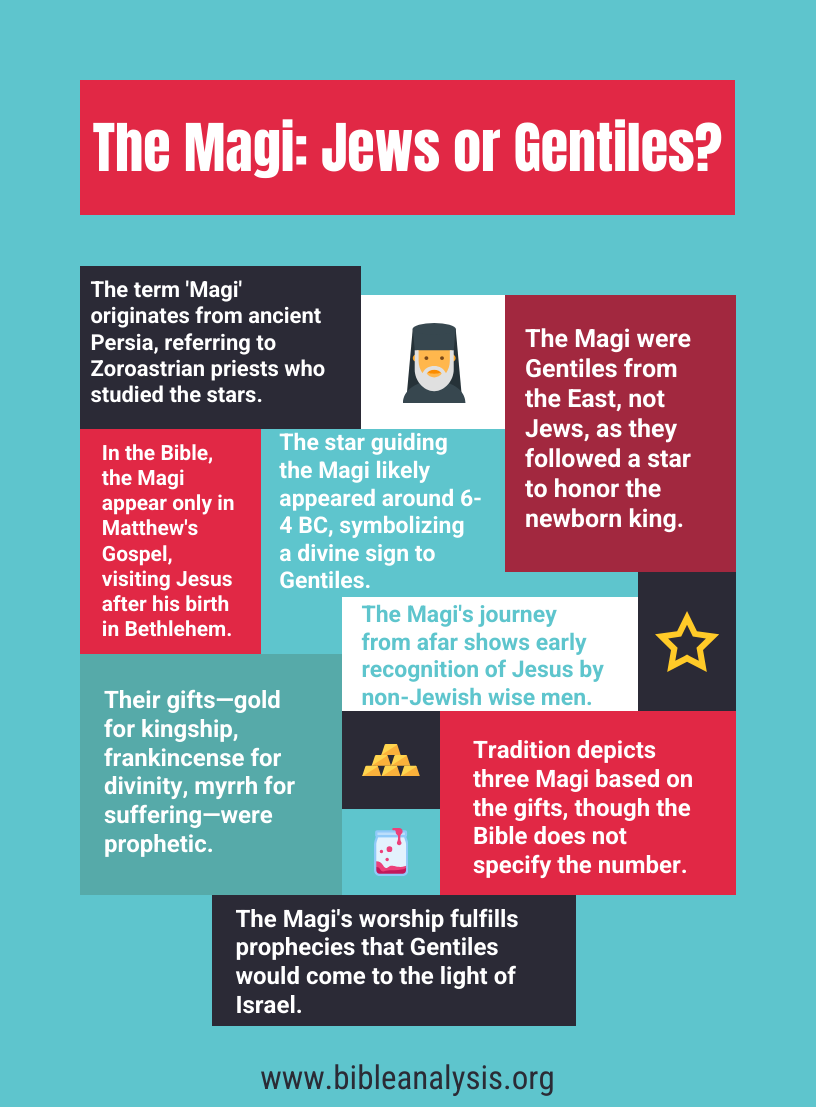
The Biblical Account: Who Were the Magi?
Matthew’s Gospel provides the only biblical account of the magi:
“After Jesus was born in Bethlehem in Judea, during the time of King Herod, Magi from the east came to Jerusalem and asked, ‘Where is the one who has been born king of the Jews? We saw his star when it rose and have come to worship him.’” (Matthew 2:1-2)
This brief description leaves many questions unanswered. In the ancient world, “magi” referred to a class of wise men, priests, or astrologers, especially from Persia (modern Iran) or Babylon (modern Iraq). They were known for their knowledge of the stars, interpretation of dreams, and sometimes their role as royal advisers. The fact that they came “from the east” supports the idea that they originated beyond the borders of Israel, possibly from Mesopotamia or Persia.
Historical and Cultural Background of the Magi
To appreciate who the magi were, it is important to consider the historical and cultural context. In the ancient Near East, astrology and the interpretation of celestial events were highly developed, particularly in Babylon and Persia. The magi were members of a priestly caste within Zoroastrianism, the dominant religion of Persia at the time, but the term also came to refer more broadly to wise men, astrologers, or magicians. These individuals were often consulted by kings and rulers for their wisdom and ability to interpret omens.
The magi’s interest in a star signifying the birth of a “king of the Jews” suggests they were adept in astrology and familiar with Jewish prophecies, or at least with the idea that the stars could herald significant events. However, their foreign origins and religious background set them apart from the Jewish people of Judea.
Jewish or Gentile? Examining the Evidence
Most biblical scholars agree that the magi were Gentiles, not Jews. There are several reasons for this conclusion:
- Geographic Origin: Matthew specifies that the magi came “from the east,” a phrase commonly used in the Bible to refer to lands beyond Israel, particularly Babylon or Persia.
- Religious Background: The magi’s practices—astrology and dream interpretation—were associated with Gentile cultures. While Jews occasionally practiced dream interpretation (e.g., Joseph in Genesis), astrology was generally frowned upon in Judaism as contrary to the worship of the one God.
- Outsider Status: In the narrative, the magi must inquire of Herod and the Jewish religious leaders about the location of the Messiah’s birth. This suggests they are outsiders to the Jewish faith and unfamiliar with Jewish scriptures beyond what they may have gleaned from afar.
- Literary Function: Matthew’s Gospel often highlights the unexpected recognition of Jesus by outsiders and the failure of insiders to see what is happening. The magi’s journey contrasts with the indifference or hostility of Herod and the Jerusalem elite.
Why Would Gentiles Seek the Jewish Messiah?
The question then arises: Why would Gentile magi seek out the birth of a Jewish king? The answer lies partly in the ancient belief in the interconnectedness of cosmic events and royal births. In antiquity, the birth of a great ruler was believed to be accompanied by signs in the heavens, and astrologers from many cultures would have been alert to such signs.
Moreover, during the centuries before Jesus’ birth, Jewish ideas had spread throughout the eastern Mediterranean and Mesopotamia, especially through the Jewish diaspora in Babylon. Jewish prophecies about a coming Messiah may have filtered into the consciousness of learned Gentiles, especially those interested in astrology and prophecy.
The Magi and Old Testament Prophecy
Some scholars suggest that the story of the magi echoes Old Testament prophecies about Gentile nations coming to worship the God of Israel. For example, Isaiah 60:3 proclaims, “Nations will come to your light, and kings to the brightness of your dawn.” Similarly, Psalm 72:10-11 envisions kings of distant lands bringing gifts to Israel’s king. The magi’s gifts of gold, frankincense, and myrrh not only fulfill prophetic imagery but also symbolize the recognition of Jesus’ significance by the wider world.
Symbolic Meaning: The Inclusion of the Gentiles
Matthew’s inclusion of the magi in the nativity story has profound theological implications. From the very beginning of Jesus’ life, Gentiles—those outside the covenant community of Israel—are drawn to him and recognize his importance. This foreshadows the later expansion of the Christian message beyond Judaism and anticipates the inclusion of Gentiles in the early church. The magi’s journey signifies the breaking down of barriers and the universality of Jesus’ mission.
The Magi’s Knowledge of Jewish Prophecy
Although the magi are portrayed as outsiders, they possess a certain knowledge of Jewish expectations. Their question—“Where is the one who has been born king of the Jews?”—implies at least some familiarity with messianic hopes, even if their understanding is incomplete. It is possible that their knowledge came from contact with Jews in Babylon, where a large Jewish community had existed since the exile. Jewish prophecies, such as those found in Numbers 24:17 (“A star will come out of Jacob; a scepter will rise out of Israel”), may have been known to Gentile scholars as well.
The Role of Herod and the Jewish Leaders
The reaction of Herod and the religious leaders in Jerusalem contrasts sharply with that of the magi. While the magi come to worship, Herod is threatened and seeks to destroy the child, and the chief priests and scribes seem indifferent. This juxtaposition highlights the openness of the magi and the spiritual blindness of those who should have been most prepared for the Messiah’s arrival.
Conclusion: The Magi as Gentile Pilgrims
In summary, the magi in Matthew’s Gospel are best understood as Gentiles—learned men from the East who, through a combination of natural observation and partial knowledge of Jewish prophecy, are drawn to worship the infant Jesus. Their presence at the nativity is a powerful symbol of the Gospel’s universal scope and the breaking down of barriers between Jew and Gentile. The magi’s journey reminds us that the birth of Jesus was not only a fulfillment of Jewish hopes but also a sign of hope and salvation for all people, everywhere.
FAQ: The Magi in the Nativity Story
1. Who were the magi?
The magi, often called “wise men,” were most likely a group of learned men from the East—probably Persia or Babylon. They were known for their expertise in astrology, interpreting dreams, and serving as royal advisors.
2. Where does the story of the magi appear in the Bible?
Their visit is described only in the Gospel of Matthew (Matthew 2:1-12).
3. Were the magi Jews or Gentiles?
Most biblical scholars agree that the magi were Gentiles, not Jews. Their foreign origin, practices (such as astrology), and outsider status in the story all support this view.
4. Why did the magi come to Jerusalem?
They saw a star they interpreted as signifying the birth of a king of the Jews. This, combined with possible knowledge of Jewish prophecy, motivated their search for the newborn Messiah.
5. How did the magi know about the Messiah?
The magi may have known of Jewish prophecies through contact with Jewish communities in Babylon or Persia. Ancient beliefs also held that cosmic events foretold the birth of great rulers.
6. What gifts did the magi bring, and what do they symbolize?
The magi brought gold, frankincense, and myrrh. These gifts symbolize honor and recognition of Jesus’ significance. They also echo Old Testament prophecies about Gentile nations bringing tribute to Israel’s king.
7. What is the significance of the magi being Gentiles?
Their inclusion in the nativity story highlights the universality of Jesus’ mission. It foreshadows the Gospel breaking barriers and reaching all nations, not just Israel.
8. How did King Herod and the Jewish leaders respond to the magi?
Herod felt threatened and sought to kill Jesus. The religious leaders were indifferent, contrasting with the magi’s openness and worship.
9. What lessons can we learn from the magi?
The magi’s journey shows that God draws people from all backgrounds to Himself, and that seeking Jesus sometimes comes from unexpected places. Their story encourages openness, faith, and worship.
10. Why is the magi’s visit important for Christians today?
It reminds believers that the message of Jesus is for everyone, regardless of background or origin, and that God welcomes all who earnestly seek Him.